
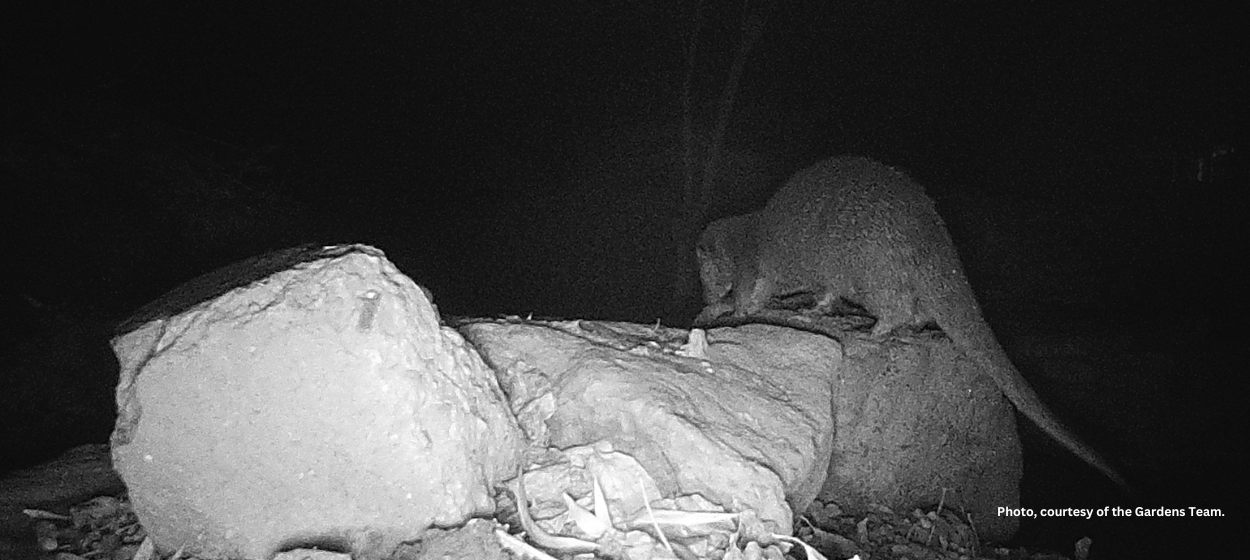
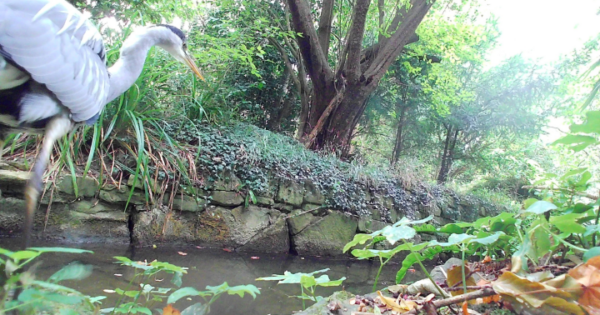
An otter has been caught close up on camera beside Bin Brook in the Fellows’ Garden at Trinity.
Nestled in the Fellows’ Garden, located off Queen’s Road, is a woodland walk and an orchard, both of which were created by the College’s Gardens Team last year.
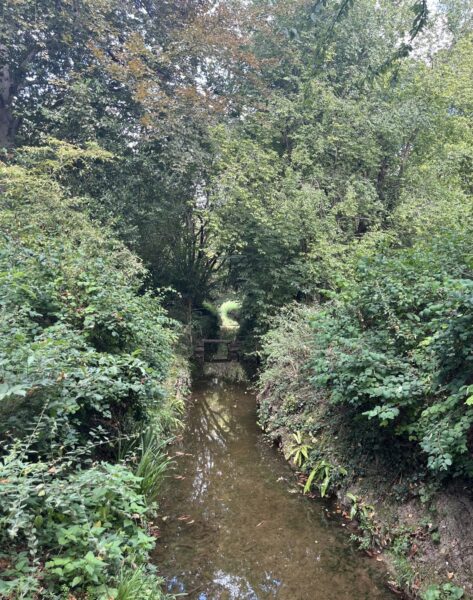
Here beside Bin Brook, which flows into the Cam, Trinity’s gardeners set up a wildlife camera after their suspicions (and hopes) were raised. Head Gardener Karen Wells said:
We had our suspicions, especially after finding poo sparkling with fish scales, which smelt a bit like jasmine tea, and small paw prints.
We are over the moon to know that our wonderful woodland walk and the burbling brook that runs through it has been visited by an otter!
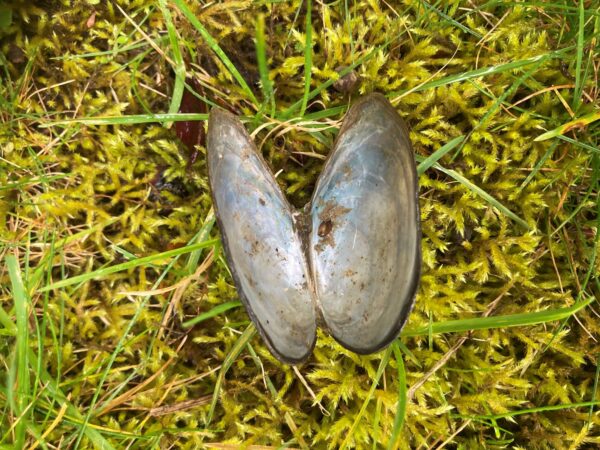
The gardeners also found freshwater mussel shells on the narrow waterway between Trinity and St John’s College, suggesting otters frequent the Backs.
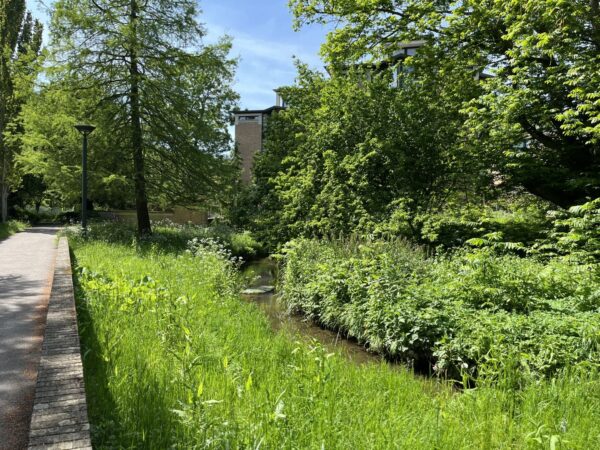
Cambridge City Council’s Biodiversity Manager Guy Belcher said otters were generally doing well in Cambridgeshire, along the Cam and its tributaries.
‘Although they remain mainly nocturnal and are seldom seen, otters do move right through the city,’ he said, with recent sightings at Logan’s Meadow Local Nature Reserve and along the East Main Drain at Coldham’s Common.
According to conservation groups, otter numbers appear to be increasing in the UK after bans on some chemical pollutants and greater conservation efforts helped reverse the dramatic decline in the population from the 1950s to the 1970s.
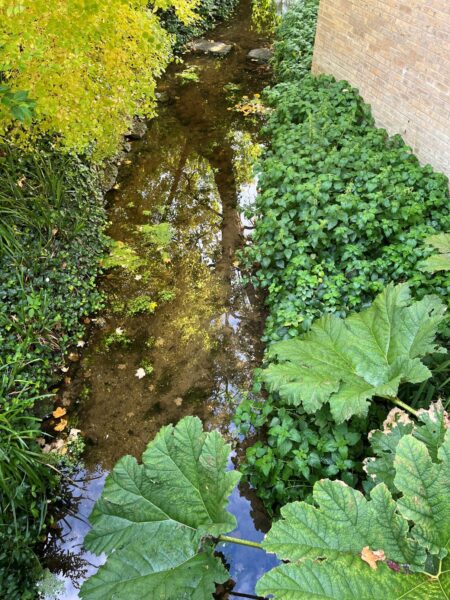
Allowing vegetation to grow on riverbanks and not rushing to clear up fallen branches or trunks provides for holts (where otters rest during the day), as well as creating hiding spots and breeding grounds for the fish they eat, said Mr Belcher.
In fact, as evidenced by the mussel shell picnics found at Trinity, otters have a varied diet, including frogs and toads, small mammals, birds and invertebrates, as well as fish and shellfish.
The otter captured on camera at Trinity comes as the Gardens Team continues to implement the College’s Biodiversity Action Plan. The aim is to make the varied habitats across the gardens more attractive to a greater range of birds, fish, insects and animals.
As well as regular sightings of fox and grey squirrel, members of the College community have spotted stoat, wood mice, weasel, shrew, hedgehog and an eel, all of which are recorded on Trinity’s wildlife database.
Ms Well said: ‘We saw 32 species of birds during the Big Garden Birdwatch recently and since January 2026, a total of 65 species have been recorded here, many nesting on site too.
Monitoring otters is challenging because they are mainly nocturnal and steer clear of humans, so estimating population numbers is difficult. The Wildlife Trusts survey UK otter populations every five years, using indirect methods such as tracks and spraints (otter faeces) as well as sightings.
While the UK otter population seems to be increasing, the IUCN Red List of Threatened Species still categorises them as ‘near threatened’ globally.
Ms Wells said:
We are absolutely thrilled that the gardens and grounds we look after are home to a rich variety of species – now including an apex predator, the elusive otter.