
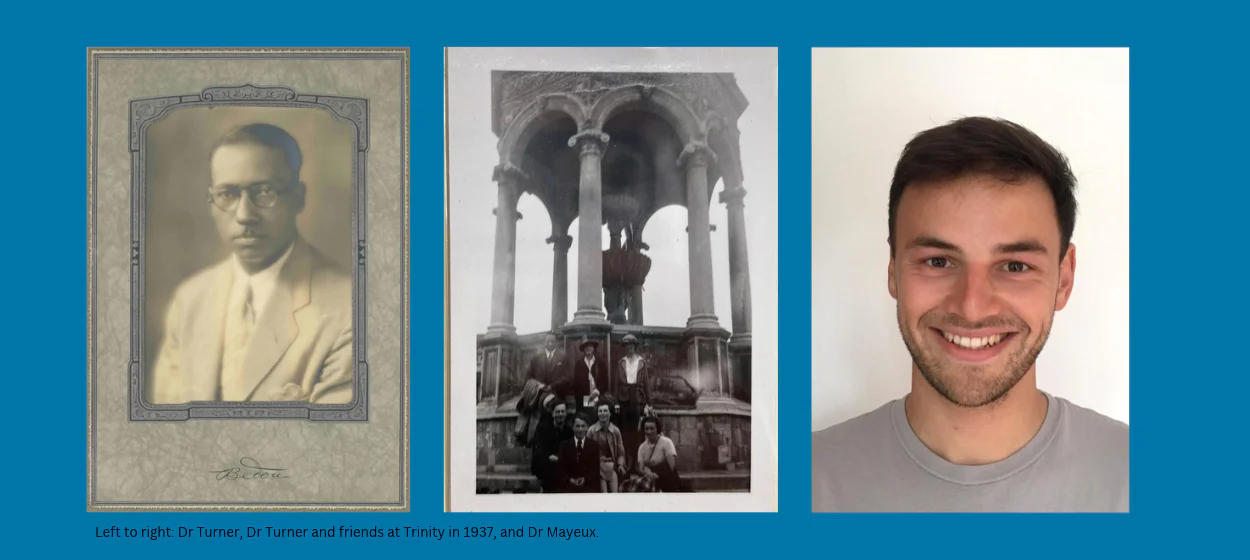
The earliest known recordings of Black professionals and labourers speaking the now-disappearing languages of Louisiana Creole and Louisiana French have been discovered by former Trinity Junior Research Fellow Dr Oliver Mayeux.
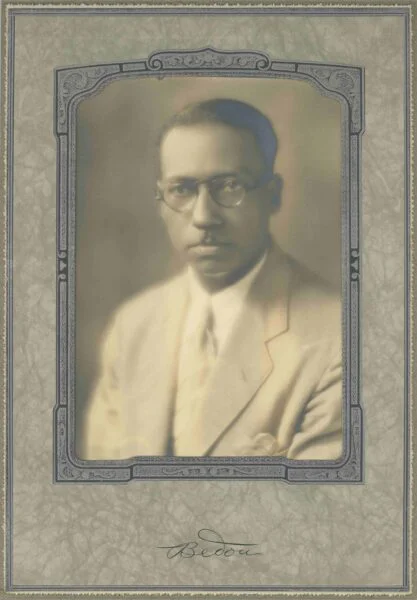
The 1935 recordings were made by the first Black linguist Dr Lorenzo Dow Turner in the decades after slavery was abolished. Dr Mayeux said:
On the discs, we hear the life stories of Black sharecroppers, labourers, and professionals, many of whom were born just as slavery was abolished, as told in their own words.
These recordings let us hear these now-disappearing languages at a time when they were still widely spoken.
Louisiana Creole originated in communities of people who were enslaved on the plantations lining the lower Mississippi River some 300 years ago. Separated from their African origins and with no knowledge of the French spoken by plantation owners and administrations, they evolved a new common language, explained Dr Mayeux.
Everybody is learning approximations of French and then approximations of approximations. Quite quickly, a new language is born.
Louisiana Creole was mostly the language of the working class and communities of colour. It was spoken throughout the port of New Orleans as well as in towns, farms and bayous across the plantation belt of the central Gulf coast,’ said Dr Mayeux.
This is the language of the levees and cane fields. The language that drifted out from French Quarter saloons along with early jazz music at the turn of the last century.
Some wealthy white people would have also learned it from their nursemaids and nannies as children,’ he said.
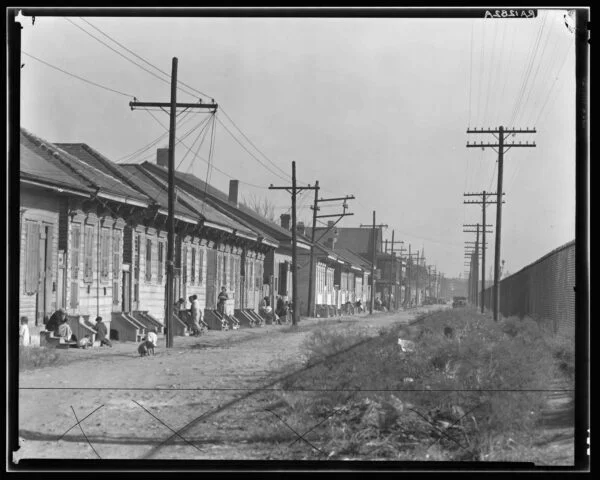
After Louisiana became part of the United States in 1803, and with it the pressure to switch from French to English, Louisiana Creole declined. Today fewer than 5,000 people speak the language, which is critically endangered.
In his efforts to understand how new languages are born and change over time, Dr Mayeux has focused on Louisiana Creole, inspired in part by his grandfather who spoke both Creole and French.
Dr Lorenzo Dow Turner’s work is legendary in linguistics, but it was not until Dr Mayeux came across a bundle of files labelled ‘Louisiana’, mostly of music, that his recordings of interviews in Louisiana were discovered. They had been preserved for posterity by the Archives of Traditional Music at Indiana University.
Listening to the recordings for the first time, I was astounded and deeply moved. And I knew immediately that it would alter the course of my research.
By analysing the recordings alongside a great deal of sleuthing across at least four archives, I have been able to reconstruct how Turner tackled the challenge of fieldwork during racial segregation and, remarkably, to identify each of the people he recorded.
Dr Turner used a large microphone connected to what looks like a cupboard to interview schoolteachers, children, a pianist, retired policeman and plantation workers, during a field trip to Louisiana.
Until now, scholars have relied on written texts to understand the language, which had stopped being passed on to the next generation by the mid-twentieth century. But written texts are an unreliable record, said Dr Mayeux, because they do not reflect how the language was actually spoken.
The moment I heard these recordings, I knew that they would drastically change our understanding of this language. In these recordings we can finally hear a fuller range of variation in the language and better understand how Creole would have developed over time.
The recordings reveal that the language borrowed more from French than was previously known. Speakers of Louisiana Creole used French grammatical forms and switched between the languages midflow.
The New York Times reported Dr Mayeux’s research through the story of Emma Benoit, who in 1935 told Dr Turner about her life born to a former slave mother and white father. Nearly 100 years later, after she was tracked down by Dr Mayeux, Valencia Pradier-Linton was stunned to hear her great-grandmother’s voice.
‘I was just numb, initially,’ she told The New York Times’ Leo Sands. ‘I don’t know how to put it in words. It is just a treasure. It’s an heirloom. It’s something that I want to keep forever, and I want to learn Creole now.’
Dr Mayeux said: ‘The materials have a great deal of emotional significance for people from the region and will be invaluable sources for historians, folklorists, musicologists and anthropologists.’
Then came an extraordinary Trinity twist in the tale. Dr Mayeux hoped to find photographs from Dr Turner’s Louisiana field work in a collection of 1930s’ prints held by the Amistad Archive in New Orleans.
Instead, I opened the album to find him standing in front of the fountain in Great Court.
It was just magical to see Dr Turner standing by the fountain which I’d walked past every day on my way to lunch after working on his recordings.
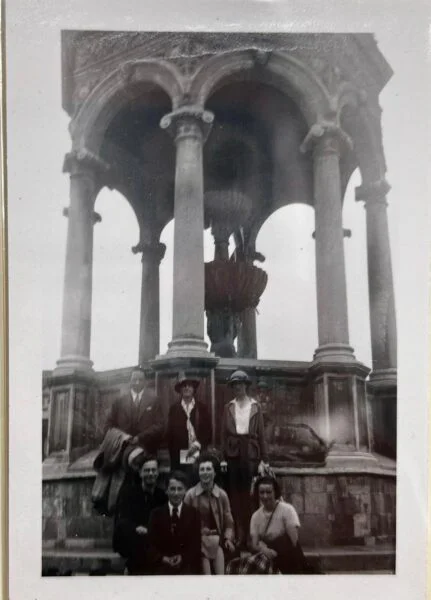
In the 1937 photograph above, Dr Turner is accompanied by his first wife (both on far left-hand side, top row) and others whom Dr Mayeux has identified with the help of Wren Library staff and a colleague at Howard University. The woman on the top right is the First World War codebreaker Mabel Dymond Peel, with her students of French below.
Dr Mayeux’s remarkable discovery of Dr Turner’s recordings will strengthen the efforts of young Louisianans to revitalize Louisiana Creole through the creation of resources to learn the language and fostering new communities of speakers. For Dr Mayeux, language was a living link with previous generations.
Its words and grammar are, for me, like a call never to forget the history of slavery and segregation, along with the enduring richness of Louisiana’s Creole identity, culture, music, food, voodoo and spiritual traditions.
It’s a story which must be told and kept alive, which is exactly what the revitalization movement has been doing.
Photos: courtesy of Amistad Research Center, New Orleans. Photo of Dr Turner in New Orleans, 1935, by Arthur P. Bedou.
Read Dr Mayeux’s paper Lorenzo Dow Turner’s field recordings from Louisiana, 1935 | Language Documentation and Description
Read more about Dr Mayeux’s interests Revitalizing Louisiana Creole with a digital tool – Trinity College Cambridge