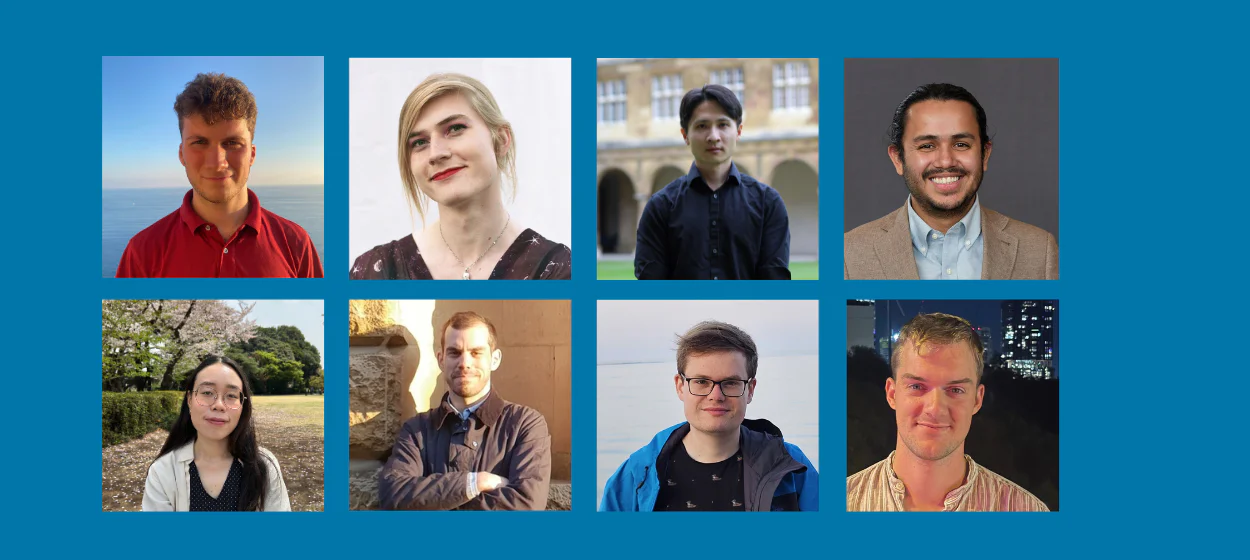
This year eight Junior Research Fellows have been elected. They share their research interests and how they will spend their time at Cambridge.
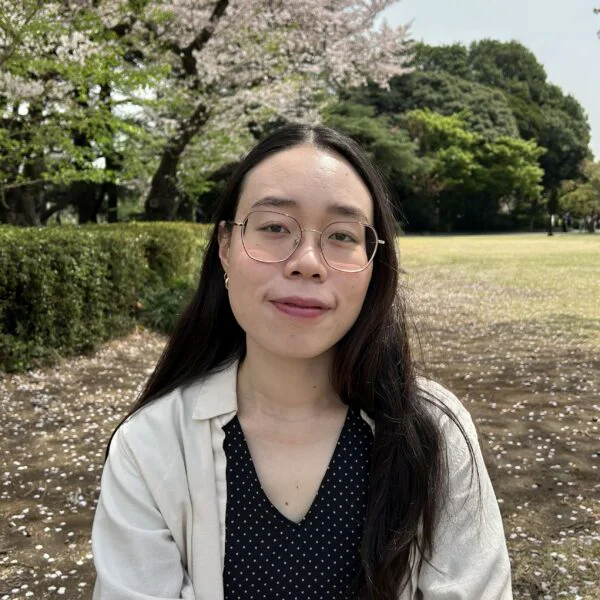
Dr Pin Yu Chew, JRF in Theoretical Chemistry
My research uses computer simulations and statistical mechanics to understand how material properties emerge from interactions between molecules. I am particularly interested in phase behaviour: why molecules spontaneously organise into different phases, form droplets or layered structures, and how these structures depend on the underlying molecular interactions.
To study these properties at the mesoscale, I develop multiscale coarse-grained models that connect detailed molecular descriptions with the larger length and time scales accessible to experiments. Much of my work focuses on soft and biological materials, including biomolecular condensates, with the broader aim of understanding and ultimately designing materials with desired properties.
Dr Joakim Faergeman, JRF in Pure Mathematics
I am a mathematician broadly interested in algebra and geometry. My doctoral thesis focused on the geometric Langlands program, an area of mathematics that brings together ideas from geometry, number theory and representation theory. What particularly appeals to me about this subject is that questions that originate in arithmetic can often be reformulated in a completely geometric way, revealing unexpected connections between seemingly different parts of mathematics.
The geometric Langlands conjecture is a certain mathematical question that predicts a deep relationship between these two worlds, and I have been part of recent work proving this conjecture.
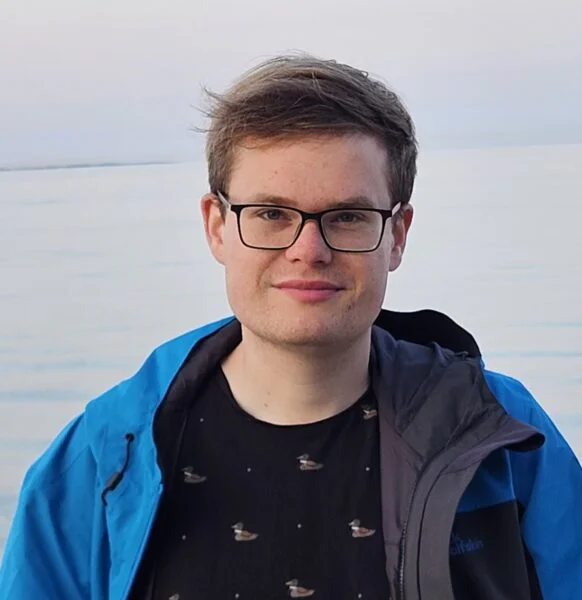
Mr Wojciech Jankowski, JRF in Theoretical Physics
Electrons typically flow along the direction in which a voltage is applied. However, if the quantum states of electrons are properly twisted, the electrons can flow perpendicular to the voltage, which costs no energy, so the material does not heat up. Twists of quantum states are characterised using the mathematical concepts of topology. For instance, topology provides tools that distinguish how a Möbius strip is twisted, unlike a cylinder.
As a theoretical physicist, I apply the concepts of topology to the quantum states of electrons and of composite particles, such as bound states of electrons excited by light, called excitons. This has allowed me to predict new effects and quantum phases of matter. I am particularly interested in harnessing the topology of quantum states for photovoltaic effects adaptable to solar cells and optoelectronic effects realisable in light-emitting diodes.
During my Fellowship, I will use the fundamental frameworks of non-equilibrium physics to explore how twists of quantum states can give rise to new light-induced electric currents in crystals, converting sunlight into electricity beyond the efficiency limits of conventional solar cells. I shall also classify new possible twists of the quantum states of excitons, which can be used to improve how energy travels through light-emitting and light-harvesting devices. I hope these directions will take steps towards more efficient technologies.
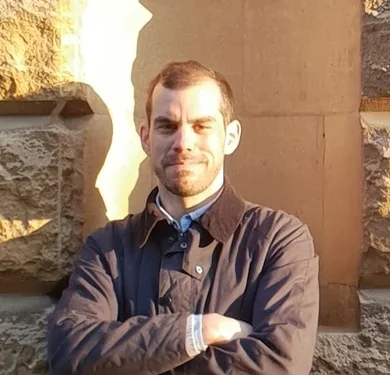
Mr Luka Pajovic, JRF in Architecture
My research is broadly concerned with religious architecture in early modern England, with a particular interest in the development of the parish church as a building type. The religious reforms of the mid-sixteenth century took place in a country arguably overstocked with church buildings, and much scholarship has been devoted to the practices of iconoclasm and destruction which attended the process. By 1600, population growth and changing religious circumstances had made the construction of new churches necessary, raising the question of the most appropriate mode of building for places of reformed worship. My approach combines the study of early modern construction and design practice with a close reading of contemporary religious literature.
During my fellowship, I will develop my doctoral research on parish churches in seventeenth-century London into a book that tells the wider story of English church-building from the Reformation to the Restoration (c. 1559-1660). In addition, I am currently working on a book-length study of one of Sir Christopher Wren’s most elusive City churches, St Stephen Walbrook (1672-79), tracing its design genesis and reception in the eighteenth and nineteenth centuries.
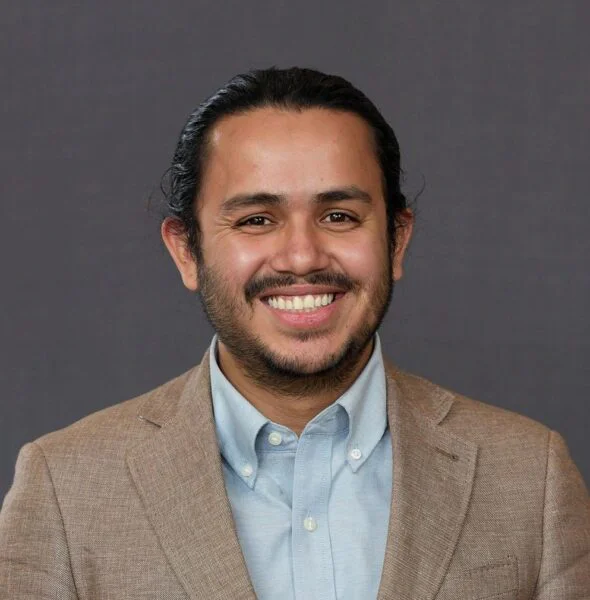
Dr Alejandro Quintana, JRF in Classics and Ancient History
I am a socio-cultural historian of Egypt under Greek and Roman rule. My doctoral thesis uses ancient Egypt’s unique wealth of everyday documents written on papyrus to argue that human migration was not only a fundamental aspect of the ancient world but also a driving force for historical change in antiquity. By tracing how ancient farmers, soldiers, and families moved across long and short distances, this research invites us to rethink what is uniquely modern about migration in our present-day societies.
During my fellowship, I will develop my PhD into a book that tells the migration history of Greco-Roman Egypt and stakes out the central role of human movement in ancient societies. I will also embark on a new project exploring how this world of connectivity and mobility lies at the heart of the regional and local identities that developed under the Romans.
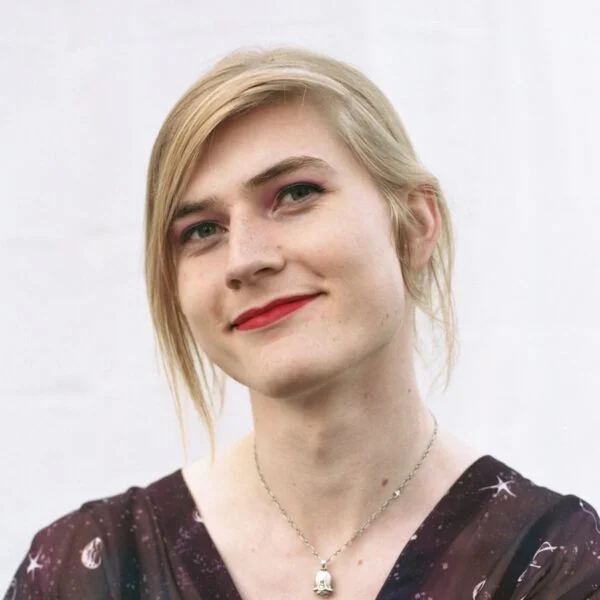
Ms Ophelia Sommer, JRF in Theoretical Physics
I study systems containing huge numbers of electrons, or other constituents, where what matters is how they behave together rather than what any one of them does. This is a hard problem, but one route into some of the possibilities lies in the geometry of the abstract space where the quantum wave function lives.
This perspective has been key to understanding materials built by stacking sheets of atoms a single layer thick, like graphene. Experiments on these have recently turned up a zoo of interesting physics, including unusual forms of superconductivity.
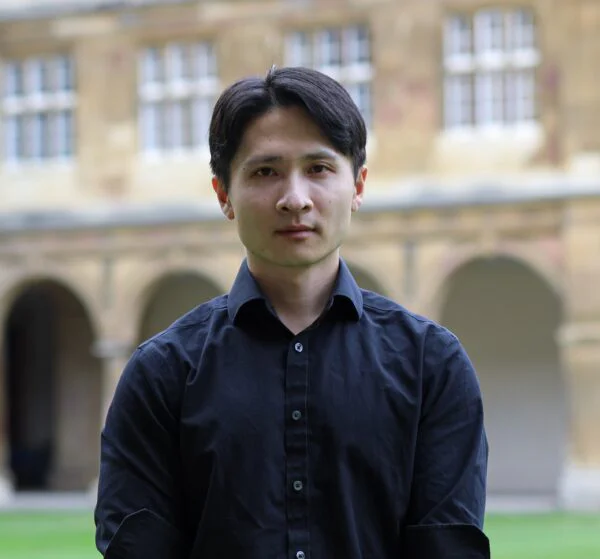
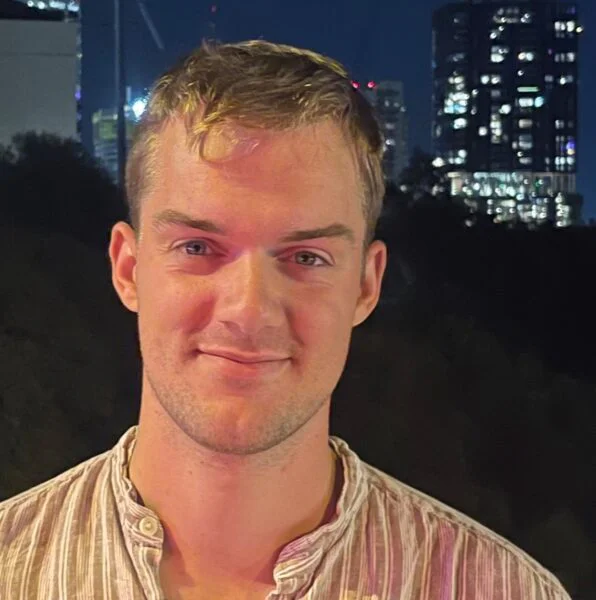
Dr Tianzheng Fu, JRF in in Civil Engineering
For centuries, civil engineers have been working hard to tackle infrastructure challenges using materials and technologies of our own making. It was not until recently that we began to realise that nature, having spent billions of years perfecting its ingenious ways of building, may already have some of the answers we have been looking for.
I work in biogeotechnics, an emerging field that explores how biological processes can be harnessed to solve ground engineering problems. My particular focus is on microbially induced carbonate precipitation (MICP), a naturally occurring biomineralisation process in which certain soil-dwelling bacteria trigger the formation of calcium carbonate – the same mineral found in limestone, eggshells, and pearls. Inside soil, this mineral grows on and between individual grains, binding them together and changing how the soil behaves.
During my PhD at Cambridge, I investigated whether MICP could be used to strengthen foundation soils beneath roads and reduce damage like rutting and potholes. As the treatment can be delivered simply by injecting bacterial and chemical solutions into the ground to grow the required mineral in situ, it holds promise for non-disruptive rehabilitation of ageing roads – a major practical need in the UK and worldwide.
At Trinity, I will continue to push this idea from the laboratory to the field, while exploring how such biological processes could help us tackle other challenges beneath our feet.
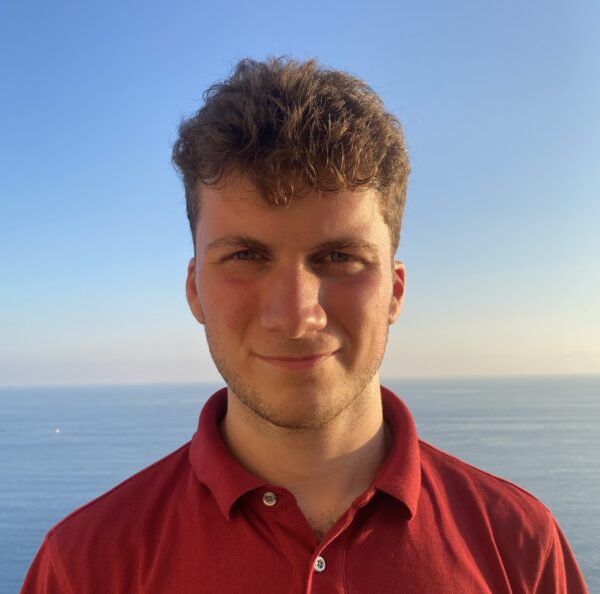
Mr Marco Vona, JRF in Applied Mathematics
I work on biological fluid dynamics, an area of physics dealing with the motion of fluids at very small scales, such as inside cells. As it turns out, the language of fluid dynamics makes it possible to understand the growth and evolution of objects not conventionally thought of as “fluid”, such as human tissues. Over sufficiently long time periods, cells in tissues replicate and pull on each other, resulting in “fluid-like” tissue motion.
In my fellowship, I will build on this idea to investigate how cancerous tissues grow and invade their surroundings, resulting in the formation of metastases and leading to significantly worse outcomes for cancer patients. I am especially interested in the physics behind different types of tumour invasion, eg the formation of invading cancer strands, rogue cancerous cell clusters, or even hollow tubular structures. Understanding how the properties of cancer cells and their interactions with the immune system, the extracellular matrix, and cancer-associated agents determine the mode of invasion will enable more targeted treatments and better predictions of the possibility of tumour recurrence.