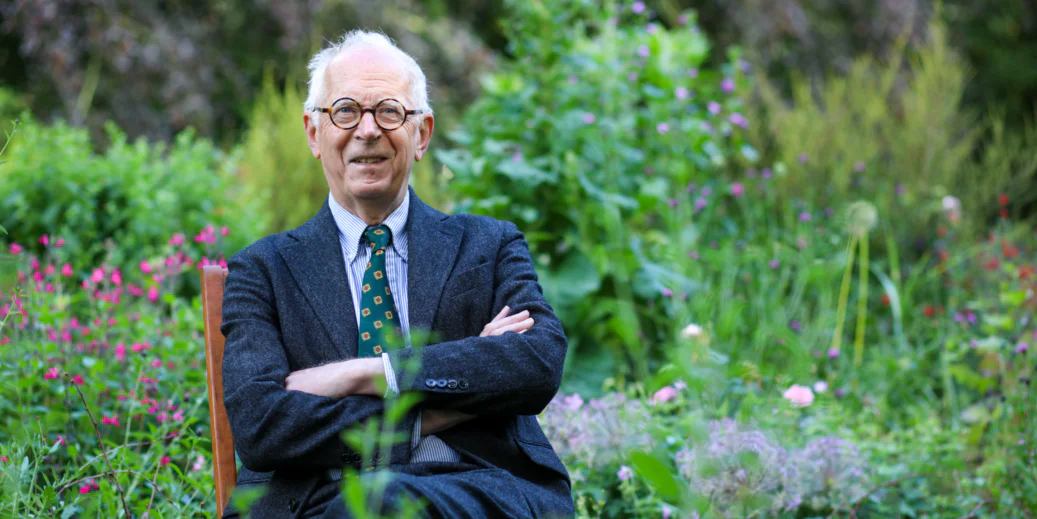
His Majesty King Charles III has appointed the plant scientist and geneticist Professor Sir David Charles Baulcombe FRS FMedSci to succeed Professor Dame Sally Davies GCB DBE FRS FMedSci as Master when she steps down later this year.
Sir David is the Regius Professor of Botany Emeritus at the University of Cambridge. He has been a Fellow of Trinity College since 2009. Sir David’s research into plant genetics has not only benefitted crop science but also led to a new class of treatment for human diseases that affect thousands of people worldwide.
Sir David will be the 41st Master of Trinity College when he takes up the role in October 2026. Dame Sally Davies will step down in September after seven years in the role.
The Office of Master
The Mastership of Trinity College Cambridge is a Crown appointment for up to eight years, made by the Monarch on the recommendation of the College.
The Master is responsible for superintending the running of Trinity, and chairs meetings of the College Council, the de facto governing body. The executive powers of the office, however, are limited: the entire Fellowship has a say in important decisions, including the election of the Master.
Sir David’s research
Sir David’s research interests have included plant hormones, disease resistance, virology and what has become known as RNA silencing. RNA – ribonucleic acid – plays a central role in the regulation of genes.
In 1999, while researching how plants protect themselves from viruses, Sir David and his postdoctoral colleague Dr Andrew Hamilton discovered very small fragments of RNA in plants that suppress or ‘silence’ the expression of genes.
The ‘silencing’ RNA that Sir David and his colleague discovered is also found in other organisms including animals. In plants these silencing RNAs block the expression of viral genes, but Sir David and his colleagues realised that they could also target other genes including those that cause disease.
Following the patenting of this research and licensing to a pharmaceutical company, several drugs based on these silencing RNAs have been developed to treat serious genetic disorders. More drugs based on this breakthrough discovery are in the pipeline.
In recognition of the major implications of small silencing RNA, Sir David shared the 2008 Albert Lasker Award for Basic Medical Research with Nobel Laureates Victor Ambros and Gary Ruvkun.
There is also potential in Sir David’s research for protection of crops against disease so that they can be grown with reduced application of pesticides. In recognition of this opportunity Sir David was awarded the Wolf Prize in Agriculture (2010).
Sir David likes to point out his work illustrates how “what is true for peas is also true for people”: there are many examples in which the basics of biology have been revealed by botany.
Awards and prizes
In 2009 David was made a Knight Bachelor for his contributions to plant science and genetics.
In addition to the Lasker and Wolf Prize Sir David has received numerous awards for his research. These include the Sir Hans Krebs Medal (2021), Mendel Medal of the Genetics Society (2017), the Prize Medal Lecture (2015) of the Society for General Microbiology, the Gruber Genetics Prize (2014), the Balzan Prize for Epigenetics (2012), and the Royal Medal of the Royal Society (2006).
Sir David was elected a Fellow of the Royal Society in 2001, an International Member of the US National Academy of Sciences in 2005, a Fellow of the Academy of Medical Sciences in 2010, an Honorary Fellow of the Royal Society of Edinburgh in 2015, and a Lifetime Member of the Pontifical Academy of Sciences in 2020.
Beyond the laboratory
Alongside his research, Sir David has supervised more than 30 PhD students and mentored numerous postdoctoral researchers, many of whom have become leading researchers in their own right.
He pioneered the establishment of the Crop Science Centre, a collaboration between the University of Cambridge and the National Institute of Agricultural Botany, which opened in 2020. The centre’s research is focused on reducing reliance on chemical inputs and maximising crop productivity, particularly for the world’s poorest farmers.
Sir David is keenly interested in addressing the more equitable use of new biotechnology in the agriculture of developing countries and for sustainable crops everywhere.
Background and career
Sir David was born in Solihull, Warwickshire, and he attended Leamington College in Leamington Spa.
As a child he developed a fascination with algae and mosses that took him to study botany at the University of Leeds before shifting to molecular biology and genetics. He received his PhD for research on messenger RNA in vascular plants at the University of Edinburgh.
Sir David conducted postdoctoral research at McGill University in Montreal and the University of Georgia in Athens before returning to the UK to join the Plant Breeding Institute in Cambridge. In 1988 he joined the new Sainsbury Laboratory in Norwich, which he led for seven years.
He was appointed Professor of Botany in the Plant Sciences Department at Cambridge in 2007 where he was Head from 2009 to 2017. In 2009 the Professorship was renamed the Regius Professor of Botany by Queen Elizabeth II. Sir David was also the Royal Society Edward Penley Abraham Research Professor at Cambridge from 2007 to 2022.
Current and recent activity
Sir David has been the Biological Secretary and a Vice President of the Royal Society since 2024.
His recent research focus is epigenetics, the science of how nurture influences nature and how environmental effects can be transmitted from one generation to the next.
Photos: Elly White/Trinity College Cambridge.