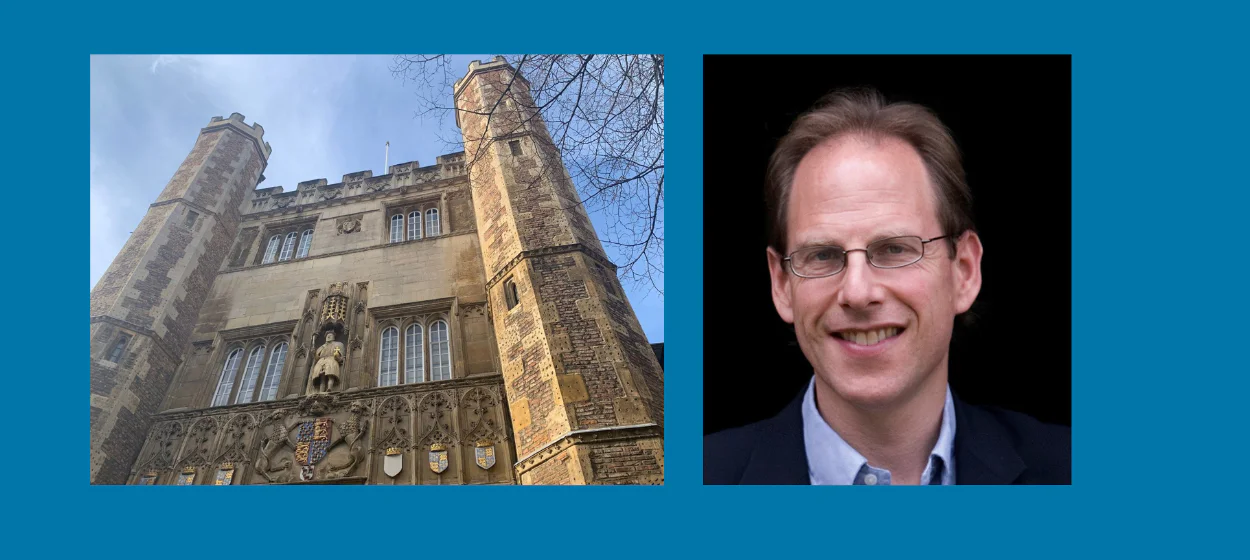
Trinity Fellow Professor Sir Simon Baron-Cohen will direct a new Autism Research Institute at Cambridge following a $34.5million donation to support research aimed at improving the health and wellbeing of autistic people and their families.
Former investment banker K Lisa Yang made the donation – one of the largest ever for autism research to a UK university and the single biggest philanthropic gift to the Cambridge’s School of Clinical Medicine since its formation in 1976.
This major gift will be used to create The K Lisa Yang Centre for Autism Research at Cambridge, The K Lisa Yang Autism Clinical Centre, which will be based in the new Cambridge Children’s Hospital, and the overarching Autism Research Institute.
Cambridge will join MIT and Harvard as a core partner of the Yang Tan Collective, also founded by Lisa Yang, which focuses on translational research into human health, disease, and environmental challenges.
Lisa Yang said she was delighted to bring Cambridge into the Collective.
The Collective is an alliance of world-class universities dedicated to cutting edge science, and two of the existing eight centres focus on accelerating autism research and improving outcomes for autistic people across their lifespan.
My hope is that the three K Lisa Yang Centres for Autism Research, in Cambridge UK, Harvard, and MIT will uncover therapeutics and interventions, improve quality of lives for autistic people, their families, and the community, with daring out-of-the-box and innovative thinking and research approaches that leverage the cross-border institutional talent pool in various disciplines in the Yang Tan Collective.
The University of Cambridge was selected for this gift because of its world-class Autism Research Centre, which was established 30 years ago. Professor Sir Simon Baron-Cohen, who has been director of the Centre for 30 years, will become the Director of the new Autism Research Institute, which will oversee the three centres.
He said:
Lisa’s incredibly generous gift provides a powerful opportunity, through the Yang Tan Collective, to build on Cambridge’s long and proud history of being at the forefront of autism research. Working in close partnership with the autism community, it will help us translate bold new ideas more quickly into real-world impact, delivering tangible benefits that can significantly improve the quality of life for autistic people.
The gift will create a long-term funding base for autism research at Cambridge, supporting academic leadership, collaboration, and innovation.
Research at The K Lisa Yang Centre for Autism Research at Cambridge will look at the challenges faced by autistic people and their families, including why life-expectancy is lower among autistic people and looking for ways to identify and diagnose autism at an earlier stage, ensuring individuals are able to access care and support as soon as they need it.
The K Lisa Yang Felllowships will support the best early career academics in the field of autism and neurodivergent research, bringing in fresh perspectives and accelerating progress towards meaningful benefits for the autism community.
The partnership with Harvard and MIT will also enable exchange, collaboration and joint symposia, bringing together the world’s foremost experts in the field.
The K Lisa Yang Autism Clinical Centre at the Cambridge Children’s Hospital will serve not only autistic people and their families but also clinicians, researchers, data scientists and policy experts working collaboratively to improve outcomes through evidence-based interventions.
Professor Deborah Prentice, Vice-Chancellor of Cambridge said:
We’re extremely grateful for Lisa’s support and the vote of confidence she has given to Professor Baron-Cohen and his team. Her funding has already been transformative in the US and succeeded in ensuring autism researchers from Harvard and MIT work together. With her support, our researchers will be able to exchange their expertise and knowledge with their peers in the ‘other’ Cambridge, making a real difference to the autism community.